Knee Replacement Surgery Myths vs Facts: What You Should Know
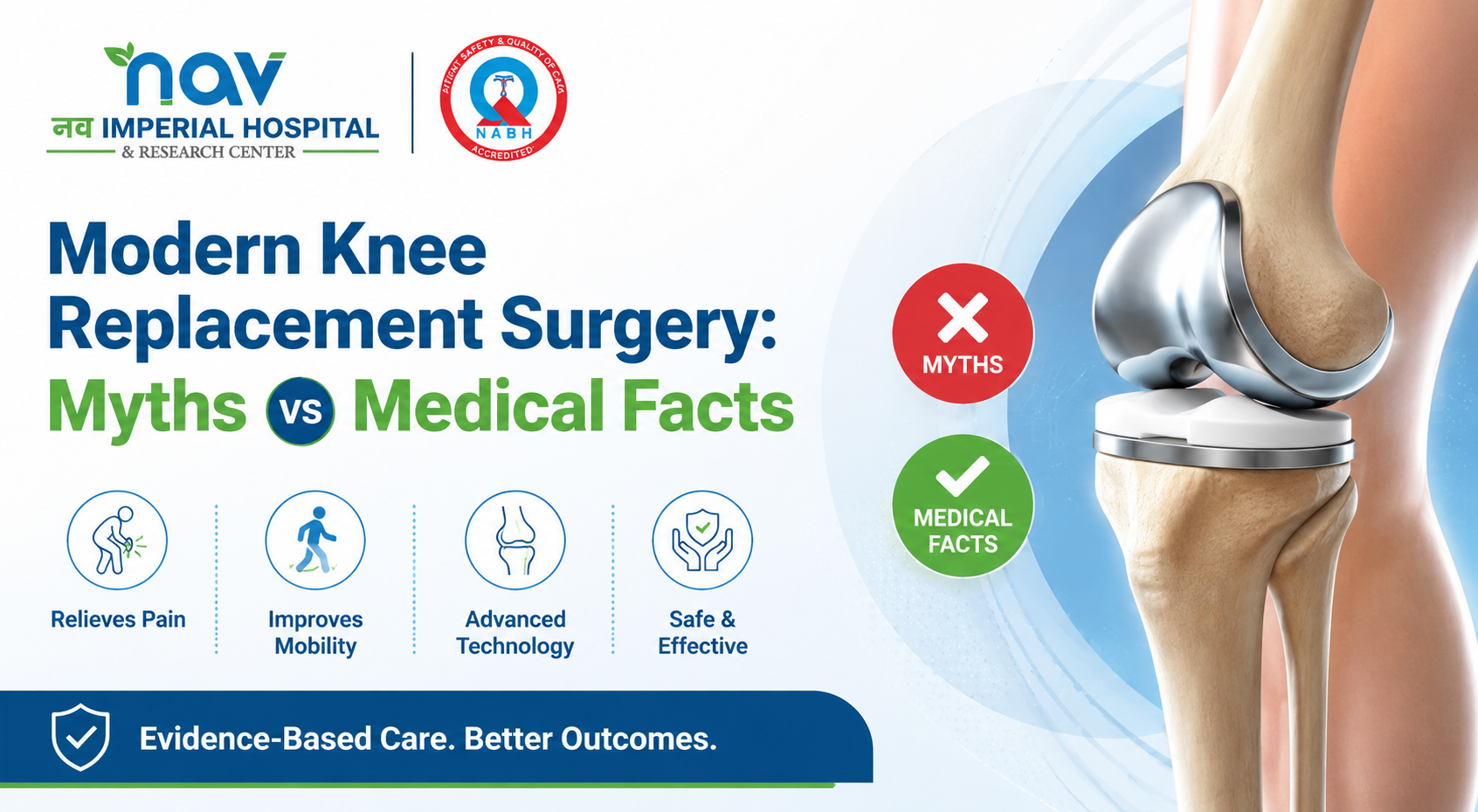
Knee pain can become unmanageable and make walking, climbing the stairs or sitting comfortably hard. Orthopedic procedures represent a definitive treatment for different orthopedic conditions when conservative treatments such as medications and physical therapy fail to relieve pain. But misconceptions can lead patients to put off the care they need. A patient's life can be turned upside down by finding the right treatment at the Best Orthopedic Hospital in Jaipur. The first step to living without pain is to know what modern medicine has to offer.
What Is Knee Replacement Surgery?
- Knee replacement surgery (knee arthroplasty) is very effective surgery in which the bone and cartilage in the knee joint which have been worn and damaged are replaced by artificial materials. They are usually crafted from high quality metal alloys and medical-grade plastics that imitate the knee's natural motions.
This surgery is recommended when:
- If the joint damage is severe, basic mobility and functioning are limited.
- If the knee pain doesn't go away during rest or at night when you're sleeping, it's persistent.
- Injections and therapy don't help for chronic inflammation/swelling.
- Knee deformities become noticeable, e.g. bending out or in.
Why Do People Need Knee Replacement Surgery?
The main purpose of the procedure is to end the serious pain and restore a properly functioning joint. As time goes on, the protective cartilage between the bones in the knee gradually wears out, allowing the bones to rub together.
Common Causes Include:
- Osteoarthritis:the most frequently occurring 'wear and tear' arthritis associated with ageing.
- Rheumatoid Arthritis:An autoimmune disease which results in the inflammation of chronic joints.
- Post-Traumatic Arthritis: Damage to the joints that is caused by previous injuries to the knee, such as fractures or tears to the ligaments.
- Avascular Necrosis: Loss of blood supply resulting in death of the bone in the joint.
Myth 1: Knee Replacement Surgery Is Only for Elderly People
Medical Fact: Most patients are 50 to 80 years old, but candidacy is based on the severity of the joint degeneration and pain, not age. Juvenile arthritis, severe trauma and early joint degradation can be treated successfully to preserve an active lifestyle.
Myth 2: The Surgery Is Extremely Painful
Medical Fact: With the advent of modern anesthesia, multi-modal pain management protocols and nerve blocks around specific nerves, post-operative pain is vastly reduced. Patients undergo controlled and manageable discomfort and not significant pain, thus enabling them to be involved in the early rehabilitation program without suffering from significant pain.
Myth 3: Recovery Takes Many Months
Advanced surgical technology and prompt post-surgery care allow for quicker recovery than ever.
Many patients:
- Do stand and move around a few steps within 24 hours after surgery.
- Gradually return to light activities within 4-6 weeks.
- Return to desk jobs in a month or so.
Recovery depends on:
- Commitment to physical rehab activities.
- The level of physical fitness and health that already exists.
- Close monitoring of surgical aftercare.
Myth 4: Artificial Knees Do Not Last Long
Medical Fact:Modern implants are extremely durable thanks to a number of advances in biomaterials. Clinical results demonstrate that more than 90% of today's knee implants will perform well for 15-20 years, and many are capable of lasting longer with good maintenance.
Myth 5: You Cannot Walk Normally After Surgery
Medical Fact: The aim of the Best Knee Replacement Surgeon in Jaipur is to return its natural functioning. At the end of healing and physiotherapy, the patient is able to walk with a natural and fluid gait and engage in low impact exercise such as swimming, cycling and golfing.
Myth 6: Surgery Is Risky and Unsafe
Medical Fact: TKA is one of the most standardized, safe major procedures in the world. The complications are very rare, particularly when carried out by an experienced specialist in a sterile and up to date operating theatre.
Myth 7: Bed Rest Is Required for a Long Time
Medical Fact: Extended bed rest is yesterday's technology! Early mobilization is the standard care, as joint movement early on prevents blood clots, helps minimize swelling and allows the implant to prevent the formation of stiff scar tissue.
Myth 8: Both Knees Cannot Be Replaced Together
Medical Fact: "Simultaneous Bilateral Knee Replacement" (replacing both knees in a single surgery) is entirely safe for patients who are in excellent systemic health, do not have any underlying cardiac problems and have excellent physical endurance for rehabilitation.
Signs You May Need Knee Replacement Surgery
It is important to identify whether a joint has failed and cannot be treated conservatively to avoid problems later on such as hip or lower back pain.
Common Warning Signs:
.- You need a walker or cane to walk short distances.
- Knee pain keeps you from settling into a good night's sleep.
- You feel a grating inside the joint (crepitus).
- Knock knees/bow legs become more noticeable.
Benefits of Modern Knee Replacement Surgery
- Better Mobility: Re-establishes the ability to freely move about by walking, climbing, bending, etc.
- Lower Pain: Stops the crippling persistent bone-on-bone rubbing and swelling.
- Enhanced Quality of Life: Makes the patient independent, and enables him to have a social life and hobbies.
- Faster Recovery: Modern, minimally invasive incisions result in lower extent of muscle disruption, allowing for faster recovery.
- Long-Term Durability: Assures decades of joint protection and systemic benefits.
Modern Technologies Used in Knee Replacement Surgery
The field of orthopedics has become much more advanced and is no longer a field of rough-and-ready exploration, but one that is incredibly precise.
Advanced Technologies Include:
- Robotic Assisted Surgery: Flawless implant alignment to suit the patient's unique anatomy.
- Computer Navigation Systems: Real-time digital mapping of the joint during the procedure.
- Patient-Specific Implants: Patient specific manufactured components based on pre-operative CT scan.
Importance of Physiotherapy After Surgery
The key to a successful surgery is physiotherapy. The surgeon will repair the mechanical structure, and the physical therapist will reconstruct the muscles that surround it. Therapy is regular, which restores the ROM, strengthens the quadriceps, and teaches the brain to work with the new joint position.
How to Prepare for Knee Replacement Surgery
Pre-operative preparation is important to make the transition into recovery as smooth as possible.
Before Surgery:
- Do pre-habilitation exercises as recommended to build core and leg strength.
- Clear away clutter, such as loose cords or rugs, from your home.
- Arrange a comfortable recovery area on the lower level, to avoid early stairs.
- Discontinue medications that thin the blood, as directed by your surgical team.
Tips for Faster Recovery After Surgery
- Do Physiotherapy Regularly: Do not miss recommended daily stretches and exercises.
- Proper Nutrition: Increase calcium, vitamin D and lean proteins to speed up bone and tissue repair.
- Stay Positive: Mental strength is a key factor in coping through physical rehab in the first few weeks.
- Maintain Healthy Weight: Excess weight puts extra strain on the new implant.
- Go to Follow-Up Visits: Give your surgical team the opportunity to track how your incision is healing and how the internal joints are doing.
When Should You Consult an Orthopedic Specialist?
When you are planning your whole day around your knee pain or when the pain medications are causing stomach discomfort, it's time for an expert opinion. When you seek the advice of a specialist early on, you will be able to find out about your structural choices before significant joint degeneration occurs.
Choosing the Right Hospital for Knee Replacement Surgery
The best results can be obtained from a center that is equipped with the latest diagnostic technology and has a very experienced medical staff. The best hospital should have separate wards for after surgery, properly-equipped physiotherapy departments, and a history of patient safety.
Why Patients Trust Nav Imperial Hospital
Nav Imperial Hospital is one of the top hospitals for Knee Replacement surgery in jaipur that offers top-notch treatment to patients. The hospital is equipped with state-of-the-art modular operating theaters and sophisticated diagnostic facilities, providing for top-notch treatment procedures.
It houses some of the best orthopedic team including the Best Knee Replacement Surgeon in Jaipur. Nav Imperial Hospital's holistic approach to patient treatment where precise surgery is paired with personal care and expert guidance with physiotherapy programs is what attracts patients to the institution.
Life After Knee Replacement Surgery
Recovery is followed by a life that is about "time recovery”. Chronic pain doesn't have to be imposed on patients while they travel, work in the garden, play with their loved ones, or lead their daily lives. A replaced knee can provide a second chance at an active, fulfilling life when the knee is properly aligned and the muscles are functioning properly.
FAQs
1. Is knee replacement surgery safe?
Yes, it is recognized worldwide as one of the safest, most predictable and highly successful surgical procedures in modern orthopedics.
2. How long does recovery take after knee replacement surgery?
Patients return to normal, mild, everyday activities within 4-6 weeks, and to full strength and full joint maturity within 6-12 months.
3. Can younger patients undergo knee replacement surgery?
Absolutely. When a younger person has suffered a significant amount of joint damage from trauma or arthritis, the surgery is done to maintain mobility and quality of life.
4. How long do knee implants last?
Modern alignment techniques and high-grade materials have seen the life of contemporary knee implants last for 15-20 years or more.
5. Is physiotherapy necessary after surgery?
Physical therapy is indeed of paramount importance. It helps to restore the full range of motion, increase muscle strength, and avoid stiffness after surgery.